



 Update
Most shooters spend a long time working on the same things: accuracy, split times, gear choices, and repetitions on the range. Those things matter, but in this episode of Making Shooters Better, Kita Busse offers a different way to look at performance.
Instead of asking only how to shoot faster or more accurately, she asks a more useful question: where is time and efficiency actually being lost? Much of that answer comes back to movement, visual discipline, and how the body processes information under pressure.
Kita is widely known for a science-based approach to the shooting sports and for her work teaching through 180 Firearms Training. Her public training presence emphasizes movement, performance analysis, and practical skill development for shooters who want to train with more intention.
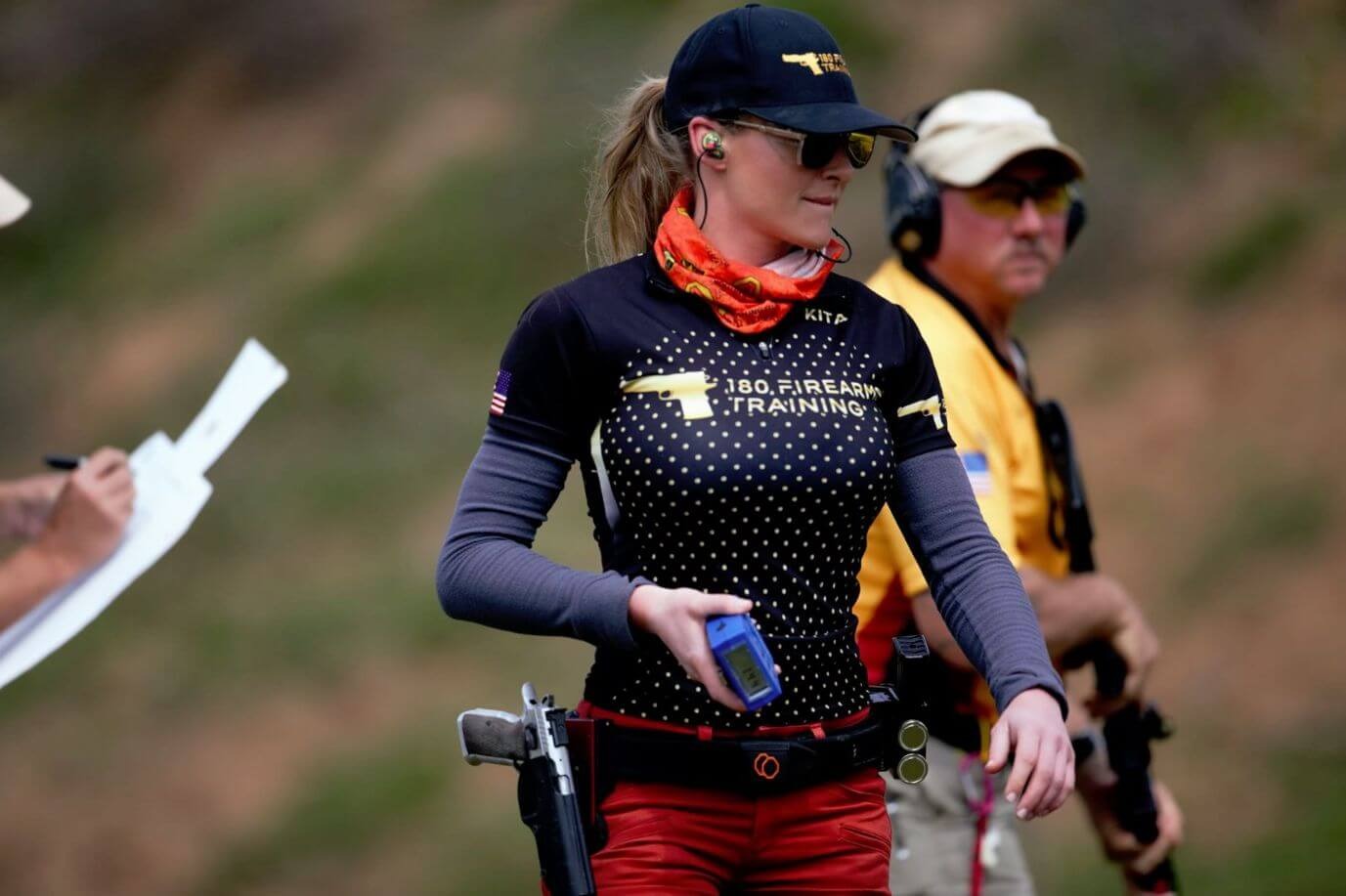
Why Movement Matters More Than Most Shooters Realize
One of the biggest takeaways from this conversation is that many shooters do not actually have a shooting problem. They have a movement problem.
That idea changes everything. If a shooter is spending too much time entering positions, exiting positions, or settling unnecessarily before breaking shots, then performance suffers long before trigger control becomes the main issue.
What Kita means by “dead time”
Kita explains that dead time is the time in a stage when you are not actively shooting, or earning points. The more of that time you carry through a stage, the harder it becomes to stay competitive.
- Slow transitions cost time
- Inefficient entries and exits cost time
- Overcommitting to static positions can cost both time and opportunity
- Poor visual planning creates hesitation that adds up quickly
For shooters trying to improve, this is an important reminder: progress is not always about firing more rounds. Sometimes it is about removing waste from the system.
Efficiency beats unnecessary effort
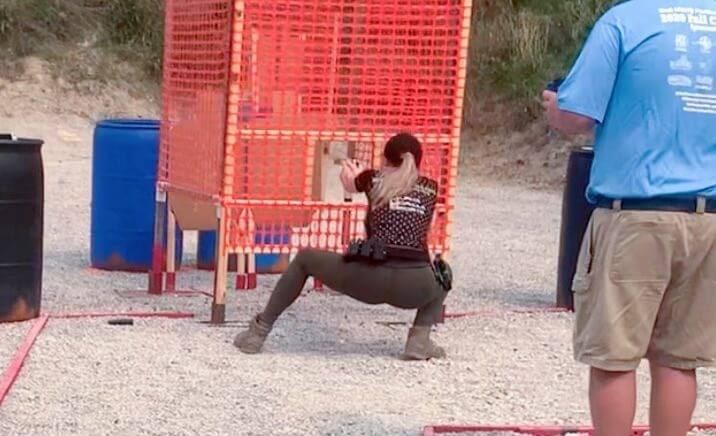
A major theme in this episode is that better results often come from cleaner mechanics, not harder effort. Kita talks about how the body naturally wants to move efficiently, and how poor movement habits can create friction, inconsistency, and even added wear over time.
That includes how shooters decelerate into positions, shift weight, manage posture, and move laterally without fighting their own structure.
Vision Training Is a Performance Skill
This episode also dives into one of the most interesting parts of Kita’s work: vision training.
Many shooters think of vision only in terms of “seeing the sights” or “finding the target,” but Kita explains that high-level performance depends on how the eyes move, what the brain filters out, and whether the shooter is visually locking onto the right information at the right moment.
Saccades vs. smooth pursuit
One of the clearest lessons from the conversation is the difference between two types of eye movement:
- Saccades are quick jumps from one visual point to another
- Smooth pursuit is the slower tracking motion used to follow movement continuously
For target transitions, Kita emphasizes that shooters generally need fast visual jumps rather than slow visual chasing. That helps the eyes arrive on the next target area sooner, allowing the gun and sights to enter that visual line more efficiently.
The value of “Quiet Eye”
Kita also discusses the concept of Quiet Eye, which centers on visual steadiness and precision. Instead of letting the eyes wander or over-search, strong performers learn to settle on a specific spot with intention.
That has practical value for shooters because it can reduce hesitation, improve target transitions, and support more disciplined shot execution.
Why this matters in training
- It helps shooters focus on a precise aiming point
- It reduces extra visual processing
- It supports better transitions between targets
- It encourages more purposeful walkthroughs and stage plans
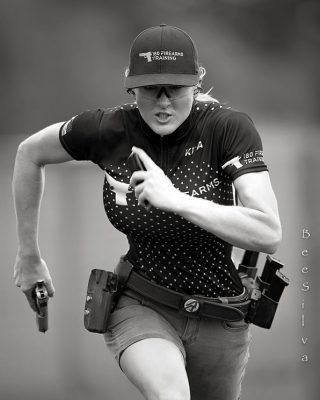
Smarter Movement, Smarter Stage Planning
Kita’s perspective is especially valuable because it connects biomechanics, visual behavior, and stage efficiency into one system.
Rather than looking at each shooting skill in isolation, she frames performance as a combination of decisions and mechanics that all affect one another.
What shooters can take from this episode
- Question whether stationary positions are really saving time
- Pay attention to how you enter and leave shooting positions
- Use visual planning, not just physical walkthroughs
- Train transitions with intention instead of rushing them
- Track performance with data instead of relying only on feel
That final point matters. Kita repeatedly comes back to measurable progress. Data gives shooters a clearer picture of what is actually improving and what still needs work.
Building Better Habits Through Dry Fire and Feedback
This conversation also fits naturally with a core Laser Ammo idea: smart, safe practice matters.
Dry fire can be a valuable place to work on visual patience, stage planning, target transitions, movement patterns, and consistency. It is not a replacement for live fire, but it can support more frequent, more intentional practice when used responsibly.
For shooters who want to improve without simply adding volume, this episode offers a better framework. Instead of repeating more reps without direction, the goal is to practice with feedback, structure, and awareness.
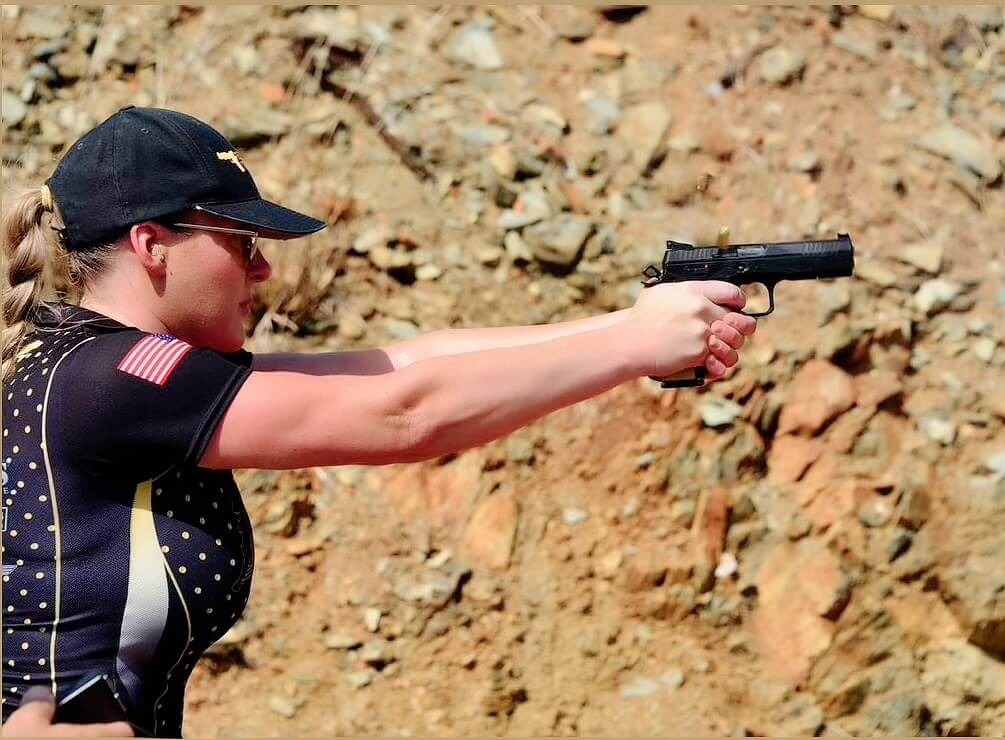
Good starting points for shooters
- Record training sessions and review movement honestly
- Track times and outcomes over multiple sessions
- Practice visual transitions with a defined point of focus
- Use dry fire to reinforce smoother, more efficient mechanics
- Keep safety at the center of every training session
Why Kita Busse’s Approach Stands Out
Kita’s public training work consistently centers on thoughtful, research-informed improvement rather than hype. That is part of what makes this episode so useful. The message is practical, encouraging, and immediately relevant to shooters who want to improve their performance in a sustainable way.
She does not frame progress as a mystery. She frames it as a system that can be observed, trained, and refined.
Watch the Full Conversation
If you want a deeper look at how movement efficiency, visual strategy, and performance data all work together, this episode is worth your time. Kita Busse shares ideas that can help shooters rethink how they train, what they pay attention to, and where meaningful improvement really comes from.
Watch the full embedded video below to hear the complete conversation, then subscribe to the Laser Ammo channel for more episodes of Making Shooters Better featuring thoughtful guests, practical training conversations, and skill-building insights for responsible shooters.
Follow Kita Busse
To learn more from Kita Busse and keep up with her training work, follow 180 Firearms Training on her public channels:
- Instagram: https://www.instagram.com/180firearmstraining/
- Facebook: https://www.facebook.com/180FT
Listen to More Episodes
You can listen to Making Shooters Better on your favorite podcast platform. Follow the show here:
- Buzzsprout: https://www.buzzsprout.com/2532363/follow
- Amazon Music https://music.amazon.com/podcasts/8156b69d-5ad9-46e9-9a4d-2baff1fbc9ef/making-shooters-better
- Apple Podcasts: https://podcasts.apple.com/podcast/id1849466402
- Spotify: https://open.spotify.com/show/5EhHThJEeV5QZ0QQn5n5CF
- Podcast Index: https://podcastindex.org/podcast/7559749
- Overcast: https://overcast.fm/itunes1849466402
- Castro: https://castro.fm/itunes/1849466402
- Podchaser: https://www.podchaser.com/podcasts/making-shooters-better-6264190
- Goodpods: https://www.goodpods.com/podcasts-aid/1849466402
- TrueFans: https://truefans.fm/65cb6a8a-c2eb-524e-b742-257cbe7bcfce
- Castbox: https://castbox.fm/vic/1849466402
- Podcast Addict: https://podcastaddict.com/podcast/making-shooters-better/6158896
- iHeartRadio: https://www.iheart.com/podcast/1333-making-shooters-better-303769503/
- Pandora: https://www.pandora.com/podcast
- TuneIn: https://tunein.com/podcasts/