



 Update
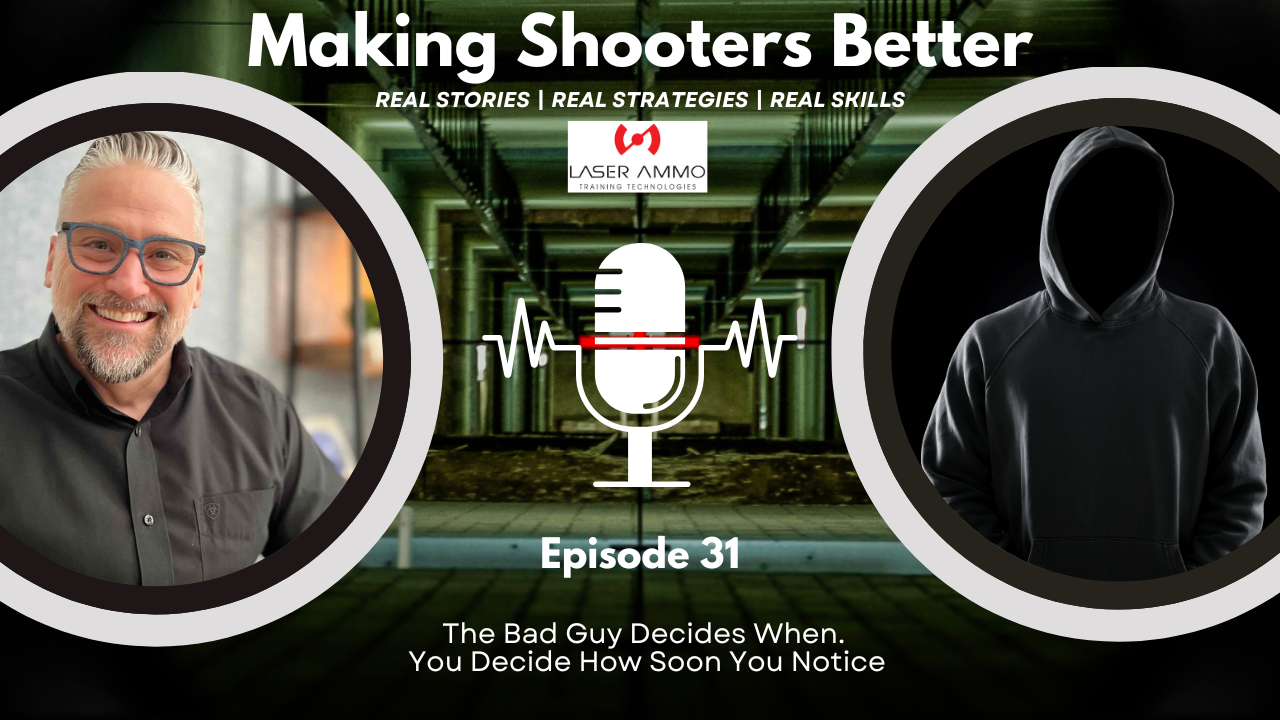
Sometimes an unexpected change creates the perfect opportunity to share something valuable. Due to an unexpected scheduling conflict, this week's episode of Making Shooters Better takes a different format as Terry Vaughan steps behind the microphone for a solo discussion focused entirely on situational awareness. Rather than an interview, this episode becomes a practical masterclass on recognizing danger sooner, understanding how our brains process information, and developing habits that can help us become more observant in everyday life.
Drawing on decades of experience in the military, behavioral science, and defensive training, Terry explains why situational awareness isn't about living in fear—it's about giving yourself more time, more options, and more confidence when something doesn't seem right.
The Only Thing You Truly Control
One of the central messages throughout the episode is both simple and powerful:
- The bad guy decides when, where, and how an attack happens.
- You don't get a vote in those decisions.
- The one thing you do control is how quickly you recognize that reality has changed.
- Every second gained through awareness provides additional time to make decisions, create distance, escape danger, or prepare to respond if necessary.
Your Brain Isn't Seeing Everything
Many people assume they see everything happening around them, but neuroscience tells a very different story.
Terry explains how our eyes constantly jump between points of interest while the brain briefly suppresses incoming visual information during each movement. This natural process—known as saccadic suppression—helps create a smooth picture of the world, but it also means we unknowingly miss details every day.
Fortunately, there are simple ways to improve what we actually notice.
Terry's Three-Scan Method
- Scan your immediate surroundings first.
- Scan again while intentionally looking beyond your original points of focus.
- Perform one final scan, extending your observation farther into the environment.
Combined with spending just a little longer focusing on each point of interest, this method dramatically increases the amount of useful information your brain processes.
Why Faces Aren't Enough
Most people naturally look at faces first. While facial expressions provide useful information, Terry explains that hands often reveal intent much sooner.
Building the habit of observing both faces and hands helps create a more complete picture of what's happening around you without becoming anxious or suspicious of everyone you encounter.
In nearly every case, you'll simply notice ordinary, harmless behavior—but developing the habit prepares you for the rare occasion when something truly stands out.
Understanding Inattentional Blindness
One of the biggest obstacles to awareness isn't poor eyesight—it's divided attention.
Modern distractions, especially smartphones, compete for the same limited cognitive resources we rely on to recognize potential threats.
Terry discusses how inattentional blindness causes people to completely overlook obvious events because their attention is focused somewhere else.
He recommends avoiding unnecessary distractions during locations that naturally increase vulnerability, including:
- Parking lots
- Gas stations
- Doorways and entrances
- Elevators
- ATMs
- Any transition between locations
Simply putting the phone away while moving through these environments allows your attention to remain where it matters most.
Normalcy Bias: Why We Explain Away Danger
One of the most fascinating sections of the episode explores normalcy bias.
Our brains constantly predict what should happen based on previous experiences. Because most days are uneventful, we naturally assume today will be the same.
That expectation often causes us to dismiss unusual behavior instead of recognizing it as potentially significant.
Terry explains that our instinct frequently notices something before our conscious mind does—but we often talk ourselves out of trusting that feeling because we don't want to appear rude, paranoid, or overly cautious.
Learning to recognize those instincts without overreacting helps us make better decisions while remaining calm and objective.
Looking for Baselines Instead of Threats
Rather than searching for "bad guys," Terry encourages listeners to establish a baseline for every environment.
Ask yourself:
- What behavior is normal here?
- Who appears unusually attentive?
- Who stands out from everyone else?
- Does someone's behavior fit the environment?
By identifying what's normal first, unusual behavior naturally becomes easier to recognize.
Observation Creates Confidence
Situational awareness is not about living in a constant state of alert. Instead, it's about developing simple habits that eventually become automatic.
Just like learning to drive, observation skills improve through repetition until they require very little conscious effort. The result isn't increased fear—it's increased confidence.
When Avoidance Isn't Possible
While the goal is always to recognize problems early enough to avoid them, Terry also reminds listeners that avoidance isn't always an option.
If you're a responsibly armed citizen or someone who carries defensive tools, consistent practice matters. Building skill through safe, structured dry-fire training helps prepare you for the situations everyone hopes never occur while reinforcing responsible firearms handling and confidence under pressure.
Watch the Full Conversation
This special solo episode offers practical techniques that anyone can begin applying immediately. From understanding how your brain processes information to learning simple observation habits that improve everyday awareness, Terry provides actionable lessons grounded in real-world experience—not fear.
Watch the full episode to hear Terry explain these concepts in greater depth and discover practical exercises that can help you become more observant, more confident, and better prepared to recognize danger before it reaches you.
To learn more from Terry Vaughan, visit TVEmpowers.com or connect with him through Laser Ammo.
If you enjoy this episode, be sure to subscribe to the Making Shooters Better podcast for more conversations and educational episodes focused on responsible firearms ownership, practical training, and building confidence through skill.
Listen to More Episodes
You can listen to Making Shooters Better on your favorite podcast platform. Follow the show here:
- Buzzsprout: https://www.buzzsprout.com/2532363/follow
- Amazon Music https://music.amazon.com/podcasts/8156b69d-5ad9-46e9-9a4d-2baff1fbc9ef/making-shooters-better
- Apple Podcasts: https://podcasts.apple.com/podcast/id1849466402
- Spotify: https://open.spotify.com/show/5EhHThJEeV5QZ0QQn5n5CF
- Podcast Index: https://podcastindex.org/podcast/7559749
- Overcast: https://overcast.fm/itunes1849466402
- Castro: https://castro.fm/itunes/1849466402
- Podchaser: https://www.podchaser.com/podcasts/making-shooters-better-6264190
- Goodpods: https://www.goodpods.com/podcasts-aid/1849466402
- TrueFans: https://truefans.fm/65cb6a8a-c2eb-524e-b742-257cbe7bcfce
- Castbox: https://castbox.fm/vic/1849466402
- Podcast Addict: https://podcastaddict.com/podcast/making-shooters-better/6158896
- iHeartRadio: https://www.iheart.com/podcast/1333-making-shooters-better-303769503/
- Pandora: https://www.pandora.com/podcast
- TuneIn: https://tunein.com/podcasts/