



 Update
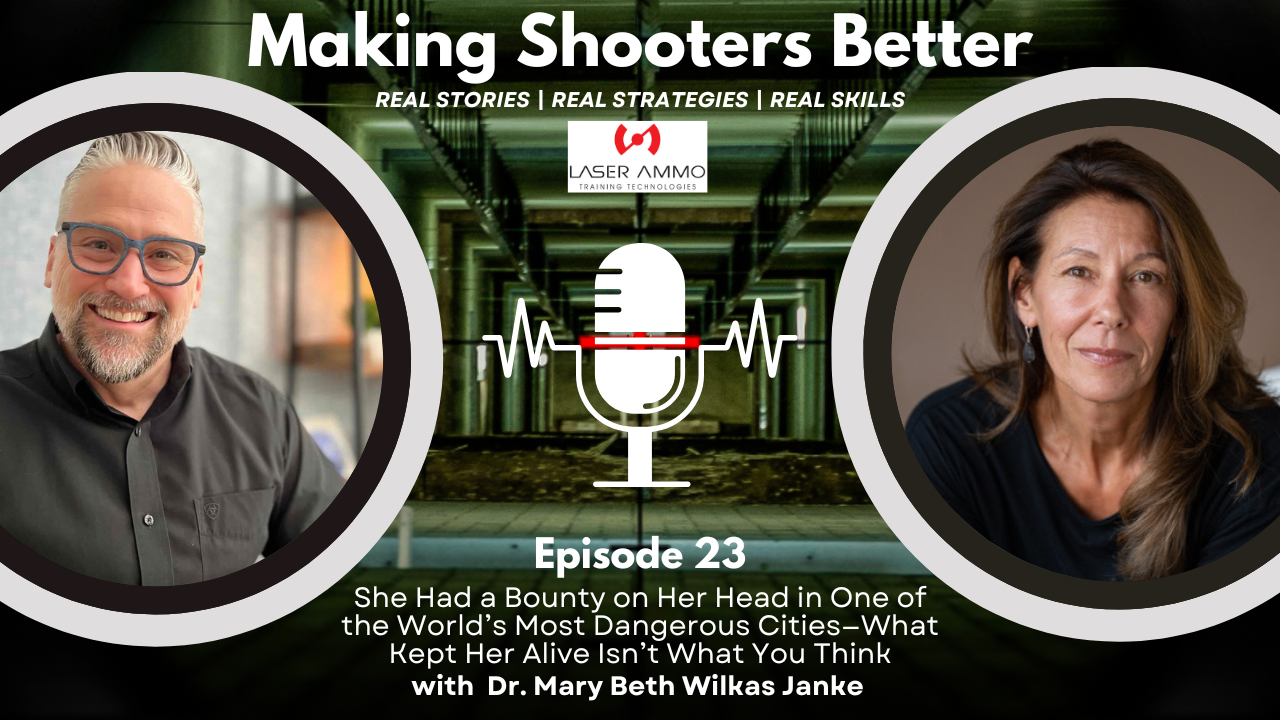
What does it take to stay calm when the pressure is real?
In this episode of Making Shooters Better, Terry Vaughan sits down with Dr. Mary Beth Wilkas Janke, a former U.S. Secret Service Agent, international protection professional, clinical and forensic psychologist, speaker, and author of The Protector.
Mary Beth brings a rare perspective to the conversation. Her career has moved through federal protection, international security, forensic psychology, public speaking, and trauma-focused work. Through it all, one theme stands out: confidence is not something people magically discover in a hard moment. It is something they build over time.
From Protection Work to Psychology
Mary Beth’s background gives her a unique way of looking at fear, safety, and resilience. She has worked in environments where preparation mattered, decisions carried consequences, and stress could not be ignored.
Her path began with an early interest in law enforcement, eventually leading to the U.S. Secret Service. From there, she moved into international executive protection, including advisory work in Colombia during a period when Bogotá was considered one of the most dangerous cities in the world.
A Different Kind of Protection Mindset
One of the strongest themes in this episode is that protection is not just about tools, tactics, or credentials. It is also about awareness, judgment, emotional control, and the ability to keep thinking when stress rises.
Mary Beth explains that fear is not automatically a weakness. Fear can be useful information. The real issue is whether a person can manage fear well enough to continue making sound decisions.
What Kept Her Moving Under Pressure
During her time working in Bogotá, Mary Beth describes leaving her garage each day knowing there was a real possibility of danger. She wore protective gear, carried her equipment, and understood the risks involved.
But what stands out is not bravado. It is discipline.
Instead of feeding fear with destructive self-talk, Mary Beth relied on simple but powerful mental anchors:
- Stay focused on the task
- Do the work, even when fear is present
- Trust the training already built
- Use self-talk that supports clear decision-making
- Recover properly after stress
Fear Is Not the Problem
Mary Beth’s message is not that people should pretend fear does not exist. Her point is more practical: fear has to be managed.
In personal safety, firearms training, professional protection, and everyday life, stress can narrow attention and disrupt decision-making. That is why preparation matters. The goal is not to become emotionless. The goal is to build enough skill, awareness, and confidence that emotions do not take over.

Self-Talk, Intuition, and Resilience
This conversation also explores how much internal dialogue shapes performance. The way people talk to themselves under pressure can either support their ability to act or make the situation harder.
Mary Beth and Terry discuss the importance of recognizing what your mind is doing before, during, and after stressful moments. Whether someone is training with firearms, learning personal safety, working in a demanding profession, or trying to recover from past trauma, self-talk matters.
Trusting Intuition
Another key takeaway is the value of intuition. Sometimes people sense that something is wrong before they can explain exactly why.
Mary Beth’s experience reinforces an important point for responsible personal safety: paying attention to behavioral cues and trusting your instincts can create time and options. Intuition should not replace training, but it can be an important signal that deserves respect.
Healthy Recovery After Stress
Mary Beth also emphasizes the importance of outlets. Stress does not simply disappear because the moment ends. People need healthy ways to decompress and reset their nervous system.
For Mary Beth, physical fitness and running have been major tools for stress management. She also discusses the importance of connection, reflection, and having more than one healthy way to recover.
Building Better Coping Skills
Healthy recovery may include:
- Exercise or movement
- Time outdoors
- Journaling or reflection
- Supportive conversations
- Rest and recovery
- Training that builds confidence gradually
The lesson is simple: resilience is not just what happens in the hard moment. It is also built in the habits before and after that moment.
Why This Matters for Shooters
At Laser Ammo, we believe better training starts with safe, consistent, responsible practice. Skill development is not only about accuracy. It is also about building confidence, making sound decisions, and learning how to perform under pressure.
Dry-fire training can be one valuable part of that process when done safely and responsibly. It gives shooters more opportunities to practice fundamentals, build consistency, and develop confidence outside of live-fire range time.
Mary Beth’s insights connect directly to that mission. Whether you are a new shooter, instructor, law enforcement professional, competitive shooter, or responsible everyday carrier, the mental side of training matters.
Key Takeaways from the Episode
- Fear is information, not a failure
- Confidence is built through preparation
- Self-talk influences performance under pressure
- Intuition can be an important personal safety signal
- Stress requires healthy recovery outlets
- Resilience is developed over time
Watch the Full Conversation
This episode is worth watching because Mary Beth brings together protection experience, psychology, and real-world lessons in a way that is practical and easy to understand. She does not talk about confidence as a slogan. She explains how it is built through experience, training, reflection, and the willingness to keep moving even when fear is present.
Watch the full conversation below, then subscribe to Laser Ammo’s YouTube channel for more episodes of Making Shooters Better. You can also follow Dr. Mary Beth Wilkas Janke through her website and social channels for more insight into resilience, confidence, trauma, and protection.
Follow Dr. Mary Beth Wilkas Janke:
- LinkedIn: https://www.linkedin.com/in/dr-mary-beth-wilkas-janke-88b6a565/
- Instagram: https://www.instagram.com/docmarybeth/
- Website: https://drmarybeth.com/
Listen to More Episodes
You can listen to Making Shooters Better on your favorite podcast platform. Follow the show here:
- Buzzsprout: https://www.buzzsprout.com/2532363/follow
- Amazon Music https://music.amazon.com/podcasts/8156b69d-5ad9-46e9-9a4d-2baff1fbc9ef/making-shooters-better
- Apple Podcasts: https://podcasts.apple.com/podcast/id1849466402
- Spotify: https://open.spotify.com/show/5EhHThJEeV5QZ0QQn5n5CF
- Podcast Index: https://podcastindex.org/podcast/7559749
- Overcast: https://overcast.fm/itunes1849466402
- Castro: https://castro.fm/itunes/1849466402
- Podchaser: https://www.podchaser.com/podcasts/making-shooters-better-6264190
- Goodpods: https://www.goodpods.com/podcasts-aid/1849466402
- TrueFans: https://truefans.fm/65cb6a8a-c2eb-524e-b742-257cbe7bcfce
- Castbox: https://castbox.fm/vic/1849466402
- Podcast Addict: https://podcastaddict.com/podcast/making-shooters-better/6158896
- iHeartRadio: https://www.iheart.com/podcast/1333-making-shooters-better-303769503/
- Pandora: https://www.pandora.com/podcast
- TuneIn: https://tunein.com/podcasts/