



 Update
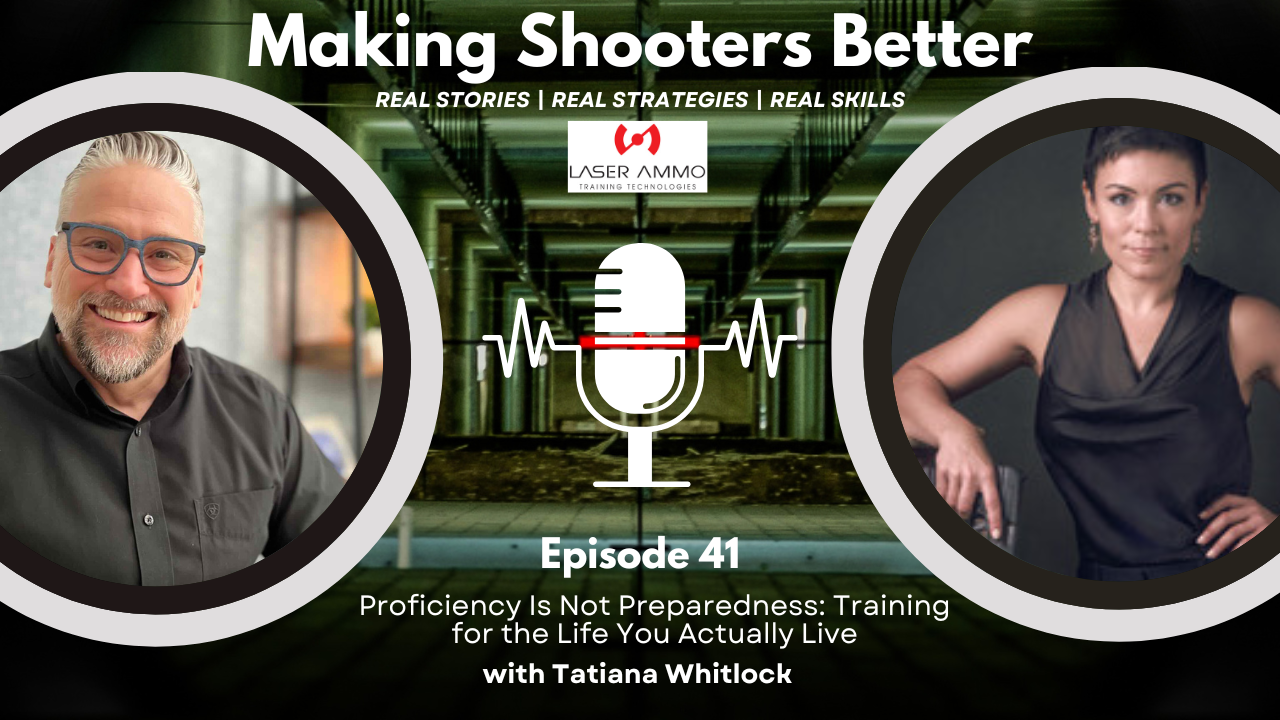
Firearms fundamentals matter, but knowing how to shoot is only part of becoming a capable, responsible gun owner. The next question is whether those skills work within the realities of your life.
In this episode of Making Shooters Better, Terry Vaughan talks with nationally recognized firearms educator and curriculum developer Tatiana Whitlock about what she calls “training in context.” It is an approach built around the individual shooter—their family, body, environment, responsibilities, capabilities, and the way they actually move through the world.
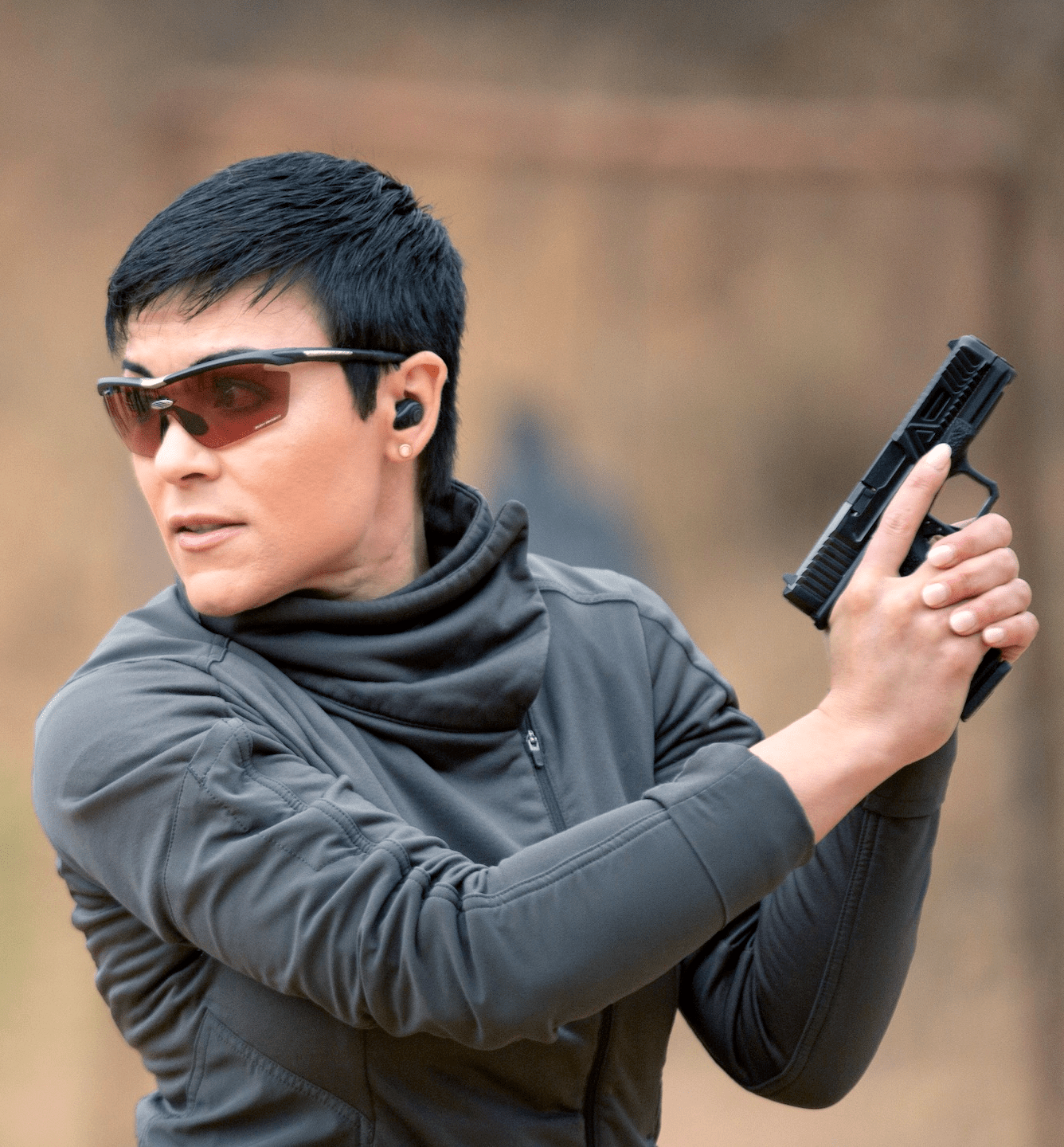
Tatiana brings years of experience developing shooters and instructors to this conversation. As National Director of Training for A Girl & A Gun Women’s Shooting League, she helps shape national curriculum, instructor education, and member development programs. She also serves as Director of Training at Howell’s Indoor Range & Shooting Academy in Maine and facilitates the A Girl & A Gun Southern Maine Chapter.
Throughout the episode, Tatiana returns to a central idea: responsible training should prepare you to think, adapt, and make decisions—not simply repeat a skill under one predictable set of conditions.
Training for the Shooter You Are Today
Tatiana did not grow up around firearms or begin shooting as a child. She fired her first handgun in her early 30s after deciding she wanted an activity of her own and signing up for a women’s shooting clinic.
That first experience mattered. The instructors created a welcoming environment, treated students as capable adults, encouraged technical questions, and gave Tatiana an opportunity to experience multiple shooting platforms.
She was hooked, but her path eventually became much more focused on defensive training and the practical questions surrounding responsible firearm ownership.
A concerning experience involving her young children became a catalyst for asking different questions. Having a firearm was not the same as knowing how to integrate that tool into the realities of protecting a family, understanding the law, navigating a home, or making responsible decisions under unfamiliar circumstances.
That realization helped shape the philosophy she still teaches today: training needs context.
The Fundamentals Stay, but the Application Changes
One of Tatiana’s key points is that the principles of shooting may be broadly consistent, but applying them is highly personal.
Your life is not static. Neither is your body or your environment. The training that fit you several years ago may need to be reconsidered today.
Changes can include:
- Having children or becoming responsible for additional family members
- Children becoming older and more independent
- Moving to a new home, neighborhood, or city
- Changing vehicles
- Seasonal changes in clothing and footwear
- Injuries, surgeries, or changes in mobility
- Changes in vision
- Getting older and adapting to new physical capabilities
- Returning to shooting after an extended break
None of these automatically make someone less capable. They simply change the problem the shooter needs to solve.
Build Adaptability, Not Just Repetition
Consistent repetition is essential for developing safe firearm handling and strong fundamentals. But Tatiana warns against allowing those skills to exist only within one predictable training environment.
A shooter may perform extremely well when the target, lighting, commands, distance, and sequence are familiar. Change one or two variables, however, and the shooter may discover that a skill was more dependent on those familiar conditions than expected.
That discovery can be extremely useful.
Training should provide safe opportunities to learn where your current capabilities end and where additional work is needed. The goal is not to create unnecessary stress or turn training into an unpleasant experience. Instead, thoughtfully changing conditions can encourage the shooter to process information, adapt, and remain engaged with what is happening around them.
Being Willing to Learn Again
Experience is valuable, but it can also create expectations based on who we used to be.
A shooter may remember how they performed five or ten years ago and expect exactly the same performance today. An injury, vision change, reduced mobility, or simply time away from regular practice can make that expectation unrealistic.
Tatiana offers a more constructive way to view that moment: you are not starting from scratch. You are starting with experience.
Instead of treating a setback as a return to zero, it can become a new plateau from which to build. The fundamentals are still there. Experience is still there. Training simply needs to account for the shooter standing on the range today.
Concealed Carry Is a Family Skill
Another major theme of the conversation is Tatiana’s approach to concealed carry. Although one person may be carrying the firearm, that person rarely moves through life completely alone.
They may be with a spouse, children, parents, friends, or other family members. Those people affect how the concealed carrier can move, communicate, disengage, and respond.
For Tatiana, that makes concealed carry a team activity.
That does not mean every family member needs to carry a firearm. It means the family can develop useful skills that support good decision-making and help everyone respond together.
Give Everyone a Role
Tatiana describes the importance of building communication and trust within the family. If one person has to focus on a developing problem, other family members may need to know what to do without requiring a long explanation.
Age-appropriate family skills can include:
- Recognizing specific verbal cues
- Responding to changes in a parent’s body language
- Moving toward or staying with a designated family member
- Understanding when it is time to leave an environment
- Paying attention to unusual behavior
- Communicating observations clearly
These skills extend well beyond firearms. They are about awareness, communication, cooperation, and helping a family navigate the world together.
Teaching Awareness Without Teaching Fear
One particularly useful part of Tatiana’s approach is how she builds observation skills with children.
Instead of presenting awareness as something frightening, she turns it into a game. Children can practice noticing people, clothing, objects, exits, or changes in an environment. Over time, that develops observation and communication while keeping the activity age appropriate.
It also creates trust.
If a child notices something that makes them uncomfortable, Tatiana emphasizes the value of listening rather than immediately dismissing that observation. The family becomes another source of information, and everyone contributes to awareness.
Your New Normal: Rebuilding Shooting Skills After a Setback
One of the most relatable lessons in the episode is that shooters change.
Sometimes that change happens gradually. Other times it arrives through an injury, surgery, physical limitation, major life transition, or an extended period away from the range.
It can be frustrating when a skill that once felt automatic suddenly feels difficult. Tatiana encourages shooters not to measure every current performance against a previous version of themselves.
Start With What You Can Do Now
Rebuilding begins with an accurate understanding of your current capabilities.
That may mean adjusting technique, equipment, expectations, or how a skill is practiced. A physical limitation might require a different position. A vision change might change how a shooter uses sights or optics. A change in mobility may affect movement strategies.
The important part is continuing to work from strong fundamentals while adapting their application.
Useful questions include:
- What has changed since I last trained consistently?
- Which skills still feel reliable?
- Where am I experiencing difficulty?
- Does my equipment still work well for me?
- Do my current training methods reflect my present capabilities?
- Would an instructor with relevant experience help me find a better approach?
Choosing an Instructor Who Fits Your Needs
Tatiana also offers an important perspective on selecting instructors. Credentials and shooting ability matter, but so does an instructor’s ability to understand the student and answer the questions that brought that person to training.
Physical differences matter. Life experience matters. Training goals matter.
A technique that works naturally for one body type may require modification for another. Likewise, a class built around one professional application may not automatically translate to a civilian student’s circumstances.
Tatiana encourages students to seek instructors whose experience is relevant to the questions they are trying to answer and who can adapt information to the individual rather than forcing every student into the same mold.
More Than Shooting Performance
The larger lesson from this conversation is that firearms education does not end with tighter groups or faster performance.
Responsible training also develops awareness, judgment, communication, adaptability, and an understanding of personal limitations. The firearm is one component of a much larger skill set.
For shooters training at home, dry-fire practice can provide additional opportunities to safely reinforce appropriate fundamentals and build consistency between range sessions. Dry fire should be conducted using appropriate safety procedures and should complement—not replace—live-fire training.
Whether practicing dry fire or working on the live-fire range, the objective remains the same: train deliberately, understand why you are practicing a skill, and continually evaluate how that skill fits your real needs.
Watch the Full Conversation
Tatiana Whitlock brings a deeply human perspective to firearms education in this episode of Making Shooters Better. The conversation moves beyond shooting mechanics to examine how family, physical changes, personal responsibilities, awareness, decision-making, and everyday life should influence the way we train.
Watch the full episode to hear Tatiana explain how her own experiences shaped her training philosophy, why families can benefit from practicing communication and awareness together, and why a setback can be an opportunity to build a stronger version of your current skill set.
Subscribe to Laser Ammo’s channel for more episodes of Making Shooters Better featuring instructors, competitors, educators, and industry professionals sharing practical insights to help shooters continue learning and developing their skills.
Follow Tatiana Whitlock
To learn more about Tatiana, view her training schedule, and follow her work in firearms education, visit:
- Website: https://www.tatianawhitlock.com/
- Facebook: https://www.facebook.com/tatiana.whitlock/
- Instagram: https://www.instagram.com/tatianawhitlock
Listen to More Episodes
You can listen to Making Shooters Better on your favorite podcast platform. Follow the show here:
- Buzzsprout: https://www.buzzsprout.com/2532363/follow
- Amazon Music https://music.amazon.com/podcasts/8156b69d-5ad9-46e9-9a4d-2baff1fbc9ef/making-shooters-better
- Apple Podcasts: https://podcasts.apple.com/podcast/id1849466402
- Spotify: https://open.spotify.com/show/5EhHThJEeV5QZ0QQn5n5CF
- Podcast Index: https://podcastindex.org/podcast/7559749
- Overcast: https://overcast.fm/itunes1849466402
- Castro: https://castro.fm/itunes/1849466402
- Podchaser: https://www.podchaser.com/podcasts/making-shooters-better-6264190
- Goodpods: https://www.goodpods.com/podcasts-aid/1849466402
- TrueFans: https://truefans.fm/65cb6a8a-c2eb-524e-b742-257cbe7bcfce
- Castbox: https://castbox.fm/vic/1849466402
- Podcast Addict: https://podcastaddict.com/podcast/making-shooters-better/6158896
- iHeartRadio: https://www.iheart.com/podcast/1333-making-shooters-better-303769503/
- Pandora: https://www.pandora.com/podcast
- TuneIn: https://tunein.com/podcasts/