



 Update
Skill Alone Isn't Enough
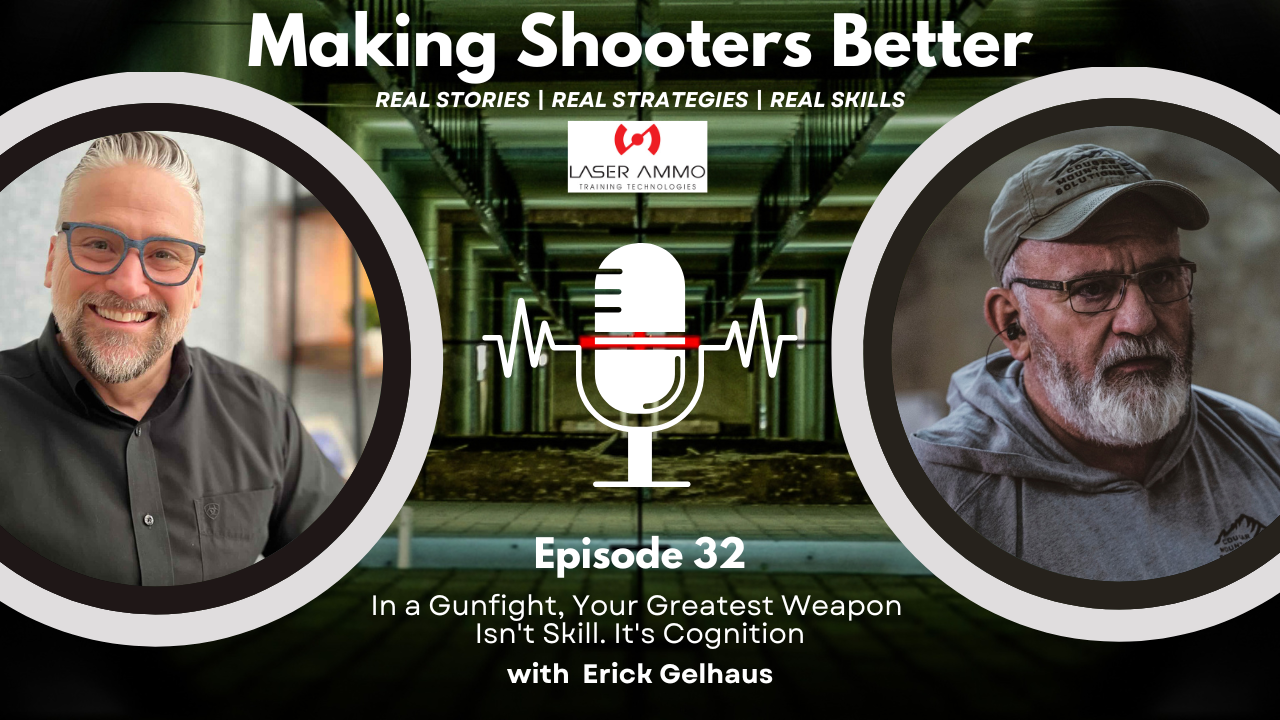
Every shooter wants to improve accuracy, speed, and consistency. Those skills certainly matter, but what happens when stress changes everything?
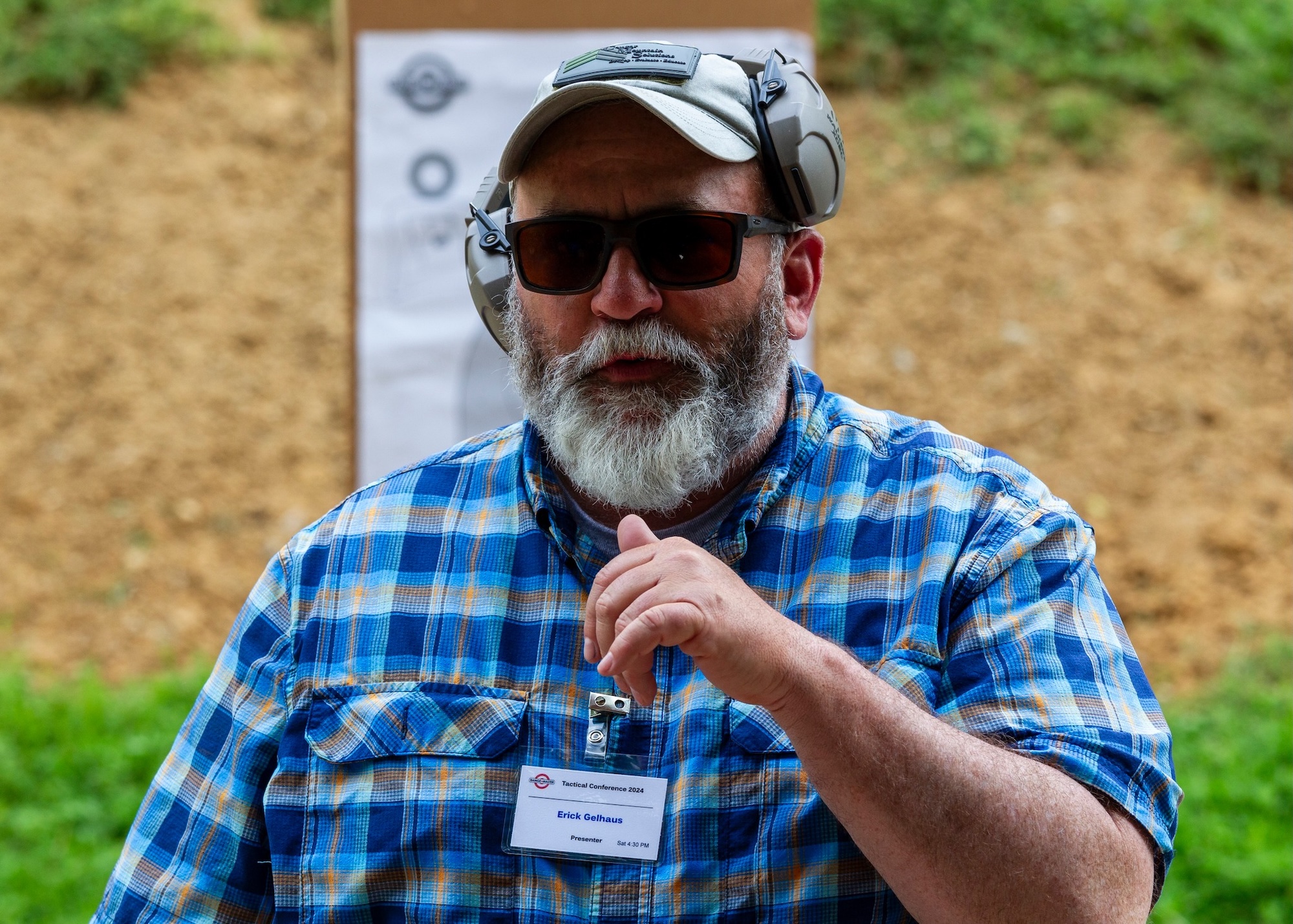
In this episode of Making Shooters Better, Terry Vaughan sits down with Erick Gelhaus, founder of Cougar Mountain Solutions, retired law enforcement officer, military veteran, firearms instructor, researcher, and editor of American Cop Magazine. Together they explore one of the most overlooked aspects of firearms training: human cognition.
Drawing from decades of real-world experience and academic research, Erick explains why developing better judgment may be even more important than becoming a better marksman.
Training the Mind Alongside the Gun
Many training programs focus heavily on shooting mechanics. Erick argues that while technical proficiency is essential, it only solves part of the problem.
Under stress, our brains filter information, make assumptions, and often rely on previous experiences to make split-second decisions. Without exposing shooters to decision-making exercises, even technically skilled shooters can make poor choices.
Developing judgment requires intentionally practicing situations where the answer isn't always obvious.
Why Scenario-Based Training Matters
One of the central themes throughout the conversation is the value of scenario-based training.
Rather than simply shooting static targets, Erick encourages instructors to create exercises that require participants to observe, evaluate, and decide before pressing the trigger.
These types of exercises help shooters:
- Recognize behavioral cues instead of reacting to movement alone.
- Process information more effectively under stress.
- Develop confidence without becoming overconfident.
- Improve judgment while reinforcing firearms safety.
By repeatedly making decisions in realistic situations, students begin building mental pathways that carry over into real-world encounters.
Understanding Human Performance
Throughout the episode, Erick shares research showing how stress influences perception, reaction time, and visual processing.
He discusses how officers and responsibly armed citizens alike naturally filter enormous amounts of information, allowing the brain to focus only on what appears important at that moment. While this ability is essential, it also creates opportunities for mistakes when incomplete information leads to incorrect assumptions.
Recognizing these human limitations allows instructors to build training that better prepares students for uncertainty.
Overconfidence Can Become a Liability
One of the most valuable discussions centers on overconfidence. Experience and skill should build confidence, but they should never eliminate humility.
Erick explains that several tragic incidents he studied were not caused by a lack of training. Instead, they stemmed from poor judgment, complacency, or overconfidence that prevented individuals from recognizing changing circumstances.
Good training continuously reminds students that every situation deserves fresh evaluation.
The Science Behind Firearms Safety
Rather than simply memorizing the four firearms safety rules, Erick encourages instructors to explain why those rules exist.
Understanding the science behind trigger discipline, muzzle management, and human reaction makes the rules far more meaningful than simple repetition.
The discussion highlights how neuroscience and human physiology reinforce practices that experienced instructors have taught for generations.
Practical Drills That Build Better Judgment
Several practical training concepts discussed during the episode include:
- Decision-based target identification.
- Scenario analysis using real incidents.
- Visual processing exercises.
- No-shoot target recognition.
- Muzzle awareness throughout every drill.
- Training with uncertainty instead of predictable outcomes.
These exercises encourage shooters to think before acting while reinforcing safe firearms handling.
Medical Skills Are Part of Responsible Training
Another important takeaway is that responsible firearms ownership extends beyond shooting.
Erick encourages every shooter to develop basic emergency medical skills alongside firearms proficiency. Recognizing medical emergencies, controlling severe bleeding, and understanding how to respond before first responders arrive are valuable skills that benefit families, training partners, and entire communities.
Continuous Improvement Never Stops
Throughout the conversation, Erick returns to one simple philosophy:
Become just a little better every day.
Whether that's improving marksmanship, strengthening decision-making, expanding medical knowledge, or simply studying human performance, consistent improvement creates more capable and responsible shooters.
Watch the Full Conversation
This episode offers far more than shooting tips. It's an in-depth discussion about how people think, how mistakes happen, and how better training can improve judgment under stress. Whether you teach others, compete, serve in law enforcement, or simply want to become a more responsible armed citizen, you'll leave this conversation with practical ideas you can immediately apply to your own training.
Be sure to watch the full episode, subscribe to the Laser Ammo YouTube channel for future episodes of Making Shooters Better, and follow Erick Gelhaus and Cougar Mountain Solutions to learn more about his classes, research, and educational content.
Listen to More Episodes
You can listen to Making Shooters Better on your favorite podcast platform. Follow the show here:
- Buzzsprout: https://www.buzzsprout.com/2532363/follow
- Amazon Music https://music.amazon.com/podcasts/8156b69d-5ad9-46e9-9a4d-2baff1fbc9ef/making-shooters-better
- Apple Podcasts: https://podcasts.apple.com/podcast/id1849466402
- Spotify: https://open.spotify.com/show/5EhHThJEeV5QZ0QQn5n5CF
- Podcast Index: https://podcastindex.org/podcast/7559749
- Overcast:https://overcast.fm/itunes1849466402
- Castro:https://castro.fm/itunes/1849466402
- Podchaser:https://www.podchaser.com/podcasts/making-shooters-better-6264190
- Goodpods:https://www.goodpods.com/podcasts-aid/1849466402
- TrueFans:https://truefans.fm/65cb6a8a-c2eb-524e-b742-257cbe7bcfce
- Castbox: https://castbox.fm/vic/1849466402
- Podcast Addict: https://podcastaddict.com/podcast/making-shooters-better/6158896
- iHeartRadio: https://www.iheart.com/podcast/1333-making-shooters-better-303769503/
- Pandora: https://www.pandora.com/podcast
- TuneIn: https://tunein.com/podcasts/