



 Update
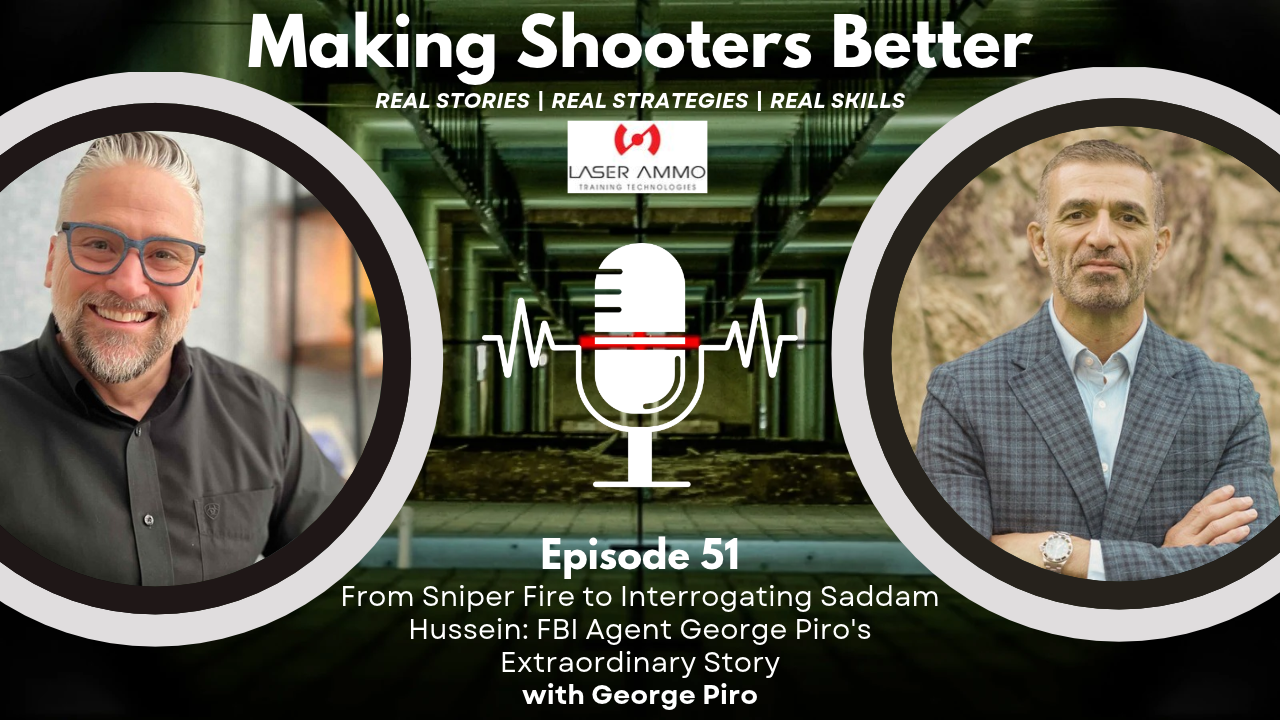
At just eight or nine years old, George Piro experienced the terrifying reality of coming under sniper fire during Lebanon's civil war. Years later, he would find himself entrusted with one of the most significant interrogations in FBI history.
In this episode of Making Shooters Better, host Terry Vaughan sits down with former FBI Special Agent George Piro to explore his extraordinary life, the responsibilities of investigating Saddam Hussein, and the importance of understanding human behavior.
From childhood adversity and international counterterrorism investigations to competitive Brazilian Jiu-Jitsu, George's story is one of determination, adaptability, discipline, and professional integrity.
From War-Torn Lebanon to a Career in the FBI
Growing Up During a Civil War
Born and raised in Beirut, George spent part of his childhood living through Lebanon's civil war. Taking refuge in bomb shelters and experiencing the dangers of armed conflict became part of everyday life for his family.
George recalls a particularly frightening childhood experience when he, his brother, and his father came under sniper fire while attempting to reach a bomb shelter.
Reflecting on that experience as a father himself, George discusses the courage his parents demonstrated and how human beings can adapt to extraordinarily difficult circumstances.
Starting Over in America
At age 12, George and his family relocated to Northern California. Arriving without the ability to speak English, he faced an entirely new set of challenges. With determination and encouragement from supportive teachers, George learned enough English within approximately three months to begin passing his classes.
His ambition to work in law enforcement eventually led him through several significant career milestones:
- Becoming a United States citizen at age 17.
- Enlisting at 18 and completing 13 and a half years of combined Air Force active-duty and reserve service.
- Becoming a police officer at age 21.
- Working as a detective investigating violent crimes.
- Completing his college education while balancing professional responsibilities.
- Entering the FBI Academy in 1999.
George credits his parents, mentors, and colleagues with helping shape the person and professional he became.
Counterterrorism and the FBI's Global Mission
Although George initially hoped to continue investigating violent crime, his ability to speak Arabic led to an assignment with the FBI's counterterrorism team in Phoenix, Arizona. He also successfully earned a position on the field office's SWAT team.
Following the terrorist attacks of September 11, 2001, the nature of his work changed dramatically. George recalls the relentless investigative workload, the importance of pursuing leads, and the responsibility of helping prevent further attacks.
Working Beyond American Borders
Terry and George also discuss a common misconception about the FBI: that its investigative responsibilities are limited to the United States.
Drawing on his experience working overseas, George explains the importance of international cooperation and the relationship between the FBI, CIA, military, and foreign authorities. His subsequent selection for the FBI's counterterrorism rapid deployment team, known as the Fly Team, took him to Iraq in 2003, where he investigated former Iraqi intelligence officials.
Little did he know that another assignment would soon bring him back to Iraq under very different circumstances.
The Christmas Eve Phone Call That Changed Everything
On Christmas Eve 2003, while heading out to finish his Christmas shopping, George received an unexpected call from a senior FBI executive. He had been selected to interrogate Saddam Hussein.
George openly discusses the apprehension he felt upon receiving the news and the enormous responsibility that accompanied the assignment. Rather than continuing with his shopping, he stopped at a bookstore, purchased two books about Saddam Hussein, and immediately began studying.
His preparation would involve extensive research and collaboration with intelligence analysts, investigators, and a specialist from the FBI's Behavioral Analysis Unit.
Seven Months With Saddam Hussein
George spent seven months with Saddam Hussein, including six months conducting interrogations. The assignment required sustained concentration, patience, extensive investigative work, and an ability to communicate effectively under considerable pressure.
Speaking Arabic allowed George to communicate directly with Saddam, while his investigative background helped him evaluate information and place conversations within their broader historical context.
George explains the importance of maintaining professional standards while pursuing intelligence that could also support future criminal proceedings.
Understanding Human Behavior Through Investigative Psychology
One of the most compelling aspects of Terry and George's conversation is their exploration of human communication and behavior.
George explains why establishing rapport was central to his work and why understanding another person does not require agreeing with their actions or compromising one's own values.
Empathy and Competence
George identifies empathy and competence as two particularly important qualities in an effective investigator.
Throughout the conversation, he reflects on the value of genuine communication, thorough preparation, professional conduct, and remaining focused on the purpose of an investigation.
Behavioral Changes Are Not Automatically Evidence of Deception
Terry and George discuss the significance of observing changes in an individual's behavior without immediately jumping to conclusions.
George emphasizes that a change in demeanor or communication does not necessarily mean someone is being dishonest. There may be other reasons for discomfort, and investigators must consider the context before reaching conclusions.
It is an important reminder of the difference between noticing behavior and understanding what that behavior actually means.
The Importance of Active Listening
Among the most valuable lessons George shares is the distinction between listening to respond and listening to understand. Effective communication requires paying attention to what another person is saying rather than simply preparing the next response.
George considers communication one of the most valuable skills a person can develop, and his experiences demonstrate its importance in both professional and personal relationships.
Investigating the Questions Behind the Iraq War
George's assignment centered on two major intelligence priorities: Iraq's weapons of mass destruction and the nature of its relationship with al-Qaeda.
During the episode, he discusses the complexities of the investigation, the problems surrounding prewar intelligence, and what his conversations with Saddam revealed. Terry and George explore several significant historical topics, including:
- The search for Iraq's suspected weapons of mass destruction.
- Why intelligence assessments concerning those weapons proved inaccurate.
- The influence of Iraq's relationship with Iran.
- Saddam's long-term intentions regarding Iraq's weapons programs.
- Questions surrounding al-Qaeda and Osama bin Laden.
- The circumstances surrounding Iraq's invasion of Kuwait.
George's firsthand account offers a perspective on the challenges of gathering reliable intelligence and investigating decisions that had international consequences.
Building a Criminal Case
The conclusion of the interrogation did not mark the end of George's involvement in the investigation. Following Saddam's transition from prisoner of war to criminal defendant, George was tasked with helping assemble the criminal case for the Iraqi authorities. This included identifying witnesses and survivors, gathering documentary evidence, examining recordings, and corroborating information to support the prosecution.
His account highlights the extensive investigative work that takes place beyond the interview room and the importance of supporting statements with independent evidence.
Maintaining Focus Under Extraordinary Pressure
While the historical significance of the interrogation is clear today, George describes the experience itself as physically and mentally exhausting. Long working days, demanding investigative responsibilities, and difficult living conditions made maintaining his concentration a constant challenge.
Running became an important daily outlet, giving him an opportunity to mentally disconnect from the demands of the investigation. His experience offers a reminder that maintaining personal well-being and having a constructive outlet can be valuable when managing prolonged professional pressure.
Finding a New Purpose Through Brazilian Jiu-Jitsu
After approximately 24 years with the FBI, George faced another major transition: leaving a profession that had helped define his identity throughout his adult life. He explains that one of the biggest challenges for retiring law enforcement officers and military personnel can be losing the camaraderie, shared purpose, and close relationships they developed during their careers.
For George, Brazilian Jiu-Jitsu provided a new community and a meaningful competitive goal. As a member of American Top Team, he dedicated himself to training and preparing for world championship competition.
George also discusses the mental preparation required to compete at a high level and why giving his best effort matters regardless of the outcome.
A Firsthand Account: The Interrogation of Saddam Hussein
George's new book, The Interrogation of Saddam Hussein: My Six Months Inside the Mind of a Tyrant, released on December 1, 2026.
Written after his retirement from the FBI, the book offers readers an opportunity to experience the investigation from George's perspective.
He explains that he wanted readers to feel as though they were sitting beside him during the conversations, experiencing the challenges and unexpected moments that accompanied his historic assignment.
The book also includes material from Saddam's personal journal and additional stories that George has not shared in the episode.
Lessons That Extend Beyond Law Enforcement
George's experiences offer several meaningful takeaways for anyone interested in personal development, professional responsibility, and understanding others:
- Resilience can help us navigate unfamiliar and challenging circumstances.
- Preparation and professional integrity matter when facing significant responsibilities.
- Empathy does not require compromising personal principles.
- Observations should be considered in context rather than treated as definitive conclusions.
- Listening to understand is an essential communication skill.
- Community, discipline, and a sense of purpose can support major life transitions.
Perhaps most importantly, George reminds us that we can engage with others effectively without abandoning our own character or values.
Watch the Full Conversation
How did a young boy growing up during Lebanon's civil war eventually become the FBI agent responsible for questioning Saddam Hussein? What did that experience teach him about communication, resilience, and professional responsibility?
Watch the full Making Shooters Better episode in the video below to hear George Piro share these experiences in his own words. Terry's nearly two-hour conversation provides fascinating historical insights alongside personal stories about family, career, competitive sports, and the challenges of understanding human behavior.
If you enjoyed this conversation, subscribe to Laser Ammo's YouTube channel, share the episode, and join us for more Making Shooters Better conversations.
Follow George Piro
- Instagram: @georgepiro_bjj
- LinkedIn: George Piro
- Book: The Interrogation of Saddam Hussein: My Six Months Inside the Mind of a Tyrant
Listen to More Episodes
You can listen to Making Shooters Better on your favorite podcast platform. Follow the show here:
- Buzzsprout: https://www.buzzsprout.com/2532363/follow
- Amazon Music https://music.amazon.com/podcasts/8156b69d-5ad9-46e9-9a4d-2baff1fbc9ef/making-shooters-better
- Apple Podcasts: https://podcasts.apple.com/podcast/id1849466402
- Spotify: https://open.spotify.com/show/5EhHThJEeV5QZ0QQn5n5CF
- Podcast Index: https://podcastindex.org/podcast/7559749
- Overcast: https://overcast.fm/itunes1849466402
- Castro: https://castro.fm/itunes/1849466402
- Podchaser: https://www.podchaser.com/podcasts/making-shooters-better-6264190
- Goodpods: https://www.goodpods.com/podcasts-aid/1849466402
- TrueFans: https://truefans.fm/65cb6a8a-c2eb-524e-b742-257cbe7bcfce
- Castbox: https://castbox.fm/vic/1849466402
- Podcast Addict: https://podcastaddict.com/podcast/making-shooters-better/6158896
- iHeartRadio: https://www.iheart.com/podcast/1333-making-shooters-better-303769503/
- Pandora: https://www.pandora.com/podcast
- TuneIn: https://tunein.com/podcasts/