



 Update
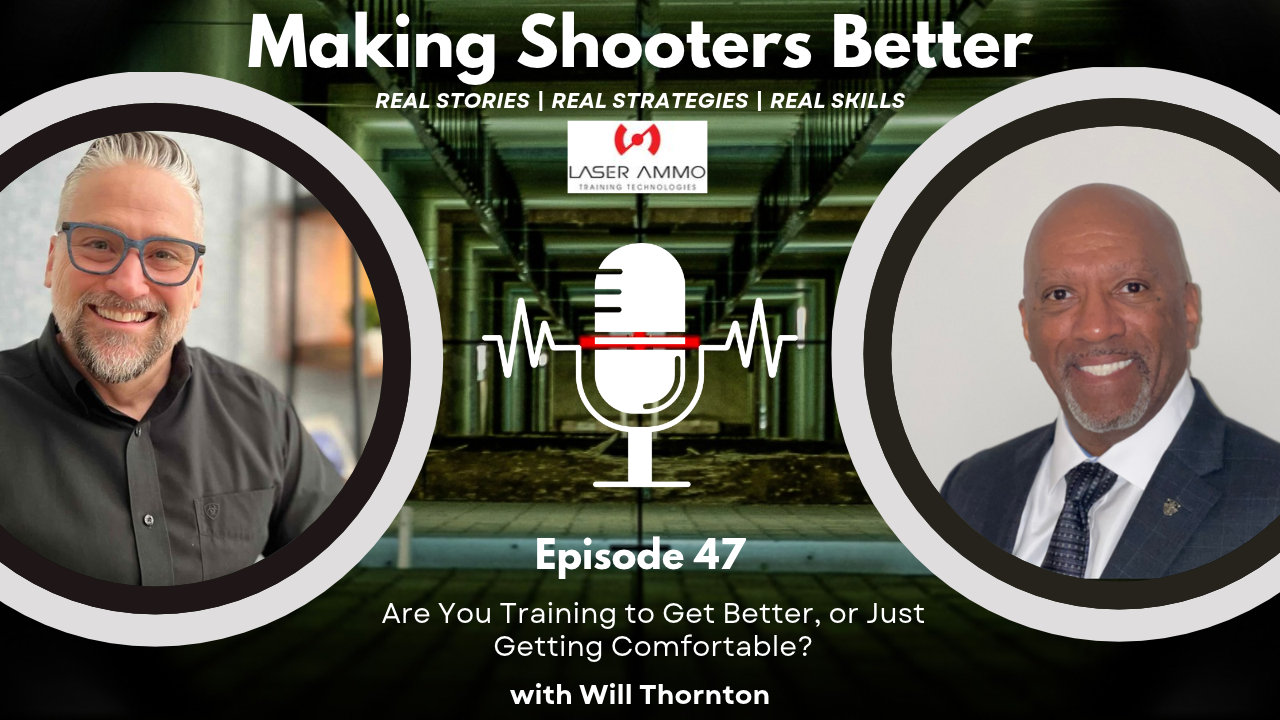
There is a point in almost every training journey when familiarity starts to feel like mastery. You know your equipment, understand the fundamentals, and can confidently perform the same drills you've practiced countless times. But are those repetitions helping you improve, or simply reinforcing what you can already do?
In this episode of Making Shooters Better, host Terry Vaughan welcomes retired U.S. Army Master Sergeant and Special Forces veteran William "Will" Thornton to explore the relationship between experience, preparation, and meaningful progress.
Will brings a distinctive perspective shaped by military service, athletic coaching, leadership, and his ongoing work helping others navigate personal and professional change. Throughout their conversation, Terry and Will examine why the willingness to be challenged may be one of the most valuable qualities a shooter can develop.
Experience Is Valuable, but It Doesn't Guarantee Improvement
Consistent practice is essential to developing shooting skills. However, the number of repetitions completed doesn't always tell us whether those skills are progressing.
Someone who has spent years practicing the same familiar exercises may become highly proficient in those specific conditions without necessarily becoming more adaptable when the conditions change.
This distinction is central to Terry and Will's discussion. A shooter can be comfortable, confident, and experienced while still having important gaps in their preparation.
Recognizing When Training Becomes Routine
Familiar exercises provide opportunities to reinforce fundamentals, measure consistency, and maintain skills. The challenge comes when those exercises become the only measure of improvement.
Rather than abandoning familiar drills, shooters can make their practice more productive by regularly evaluating:
- Which specific skill am I working to improve?
- Am I measuring progress or simply completing repetitions?
- What mistakes continue to appear in my performance?
- Have I challenged myself beyond the conditions where I feel comfortable?
- Am I willing to seek feedback from someone with greater experience?
These questions help shift the focus from simply practicing more to practicing with greater intention.
What Special Forces Selection Taught Will About Preparation
Will's understanding of preparation developed over a military career that began in armor and eventually led to the 82nd Airborne Division, the Berlin Brigade, and 3rd Special Forces Group.
Growing up in rural Virginia, Will was introduced to firearms and hunting at a young age. Through family instruction and 4-H safety education, he began developing an appreciation for responsible firearm handling early in life.
His military career later exposed him to demanding environments where physical readiness, independent thinking, teamwork, and adaptability were essential.
From the 82nd Airborne to Cold War Berlin
Will describes joining the Army as a young armor crewman before volunteering for an airborne assignment. The opportunity placed him in an unfamiliar environment and introduced him to challenges he had never experienced, including parachuting from aircraft.
His subsequent assignment to Berlin placed him at the center of a remarkable historical period. Serving with the Berlin Brigade during the Cold War, Will witnessed the fall of the Berlin Wall and the changes surrounding German reunification.
After years in armor, however, he began looking for a different challenge. Special Forces offered an opportunity to move beyond established routines and test himself in new ways.
Preparation Requires More Than Physical Fitness
Will approached Special Forces selection by developing a consistent training routine. He cycled, swam, and spent weekends completing progressively longer rucksack marches to prepare for the demands ahead. Yet physical conditioning was only one part of the process.
During selection, candidates faced fatigue, uncertainty, changing circumstances, and the psychological challenge of continuing without always knowing when a task would end.
Will and Terry reflect on how the ability to remain focused through uncertainty often distinguishes those who continue making progress from those who become overwhelmed.
The broader lesson is relevant far beyond military training: being capable in familiar circumstances is different from being prepared to adapt when expectations change.
Confidence Should Be Supported by Experience and Tested Skills
One of the conversation's strongest themes is the difference between believing you can perform a skill and having demonstrated that skill under meaningful challenges.
Will explains that when someone expresses tremendous confidence, he often wonders how that confidence would hold up when the person encounters stress, uncertainty, or failure.
For shooters, confidence can be an important outcome of regular training. But confidence becomes more useful when it is based on realistic feedback rather than assumptions.
Why Humility Makes Better Students
Terry and Will share an appreciation for individuals who combine competence with a willingness to acknowledge their limitations.
No matter how experienced someone becomes, there will always be unfamiliar equipment, different shooting disciplines, new training environments, and instructors who can offer valuable perspectives.
Recognizing those opportunities is a strength rather than a weakness.
Constructive feedback, objective performance measurements, and a willingness to revisit foundational skills can help prevent complacency.
Using Visualization and Dry-Fire Practice With Purpose
Will recalls struggling with pistol accuracy when he first began working with handguns. His progress improved when he dedicated time to practicing the fundamentals without live ammunition.
He describes using dry-fire repetitions and visualization to develop greater familiarity with the mechanics of his shooting.
He also connects this approach to his experience coaching track and field athletes, particularly high jumpers. Instead of rushing immediately into an attempt, he encouraged athletes to pause, mentally rehearse their movements, and approach the activity with greater awareness.
Making Every Practice Session More Intentional
Visualization can help shooters focus their attention on the specific movements and decisions involved in performing a skill correctly.
Dry-fire training also creates opportunities to work on fundamentals without the noise, recoil, and ammunition costs associated with live-fire sessions.
A purposeful training approach may include:
- Identifying one or two specific skills to improve during a session.
- Mentally rehearsing the desired performance before beginning.
- Practicing safe, controlled repetitions with attention to technique.
- Using appropriate training aids to receive feedback.
- Reviewing results and identifying what needs further attention.
- Confirming progress through supervised live-fire practice when appropriate.
Before any conventional dry-fire exercise, all live ammunition should be removed from the training area, the firearm verified unloaded, and a safe practice environment established. Purpose-built laser training tools should always be used according to their instructions and established firearm safety rules.
Laser Ammo's training solutions can help support this type of structured practice by offering convenient opportunities to work on shooting fundamentals and receive feedback. Dry-fire practice complements, rather than replaces, responsible live-fire training.
Moving Beyond Perfect Conditions
As shooters become more consistent with foundational skills, training should continue to evolve appropriately. Terry raises an important limitation of visualization: imagining only ideal circumstances can create unrealistic expectations. Real situations do not always unfold according to a carefully rehearsed plan.
Will agrees that increasing challenges should be introduced progressively as skill and confidence develop.
For recreational and competitive shooters, this might involve instructor-supervised exercises, varied target presentations, timed evaluations, or unfamiliar competition stages, always within the rules and safety procedures of the training environment.
The goal is not to introduce unnecessary risk. It is to learn how well existing skills transfer when the task becomes less predictable.
Learning From Failure Instead of Avoiding It
Will's experience as a track and field coach provides another perspective on meaningful growth.
He observed that naturally talented young athletes sometimes struggled when they began competing against equally capable opponents. After experiencing early success, their first significant losses could undermine their confidence.
Other athletes improved more gradually, building their abilities through consistent effort, setbacks, and continued practice.
For Will, the willingness to learn and keep progressing was often more important than early success alone.
Turning Setbacks Into Useful Feedback
The same principle applies to shooting instruction and personal practice.
A disappointing result can reveal weaknesses that a successful, familiar exercise may never expose. What matters is whether the shooter uses that information to make an adjustment.
Rather than treating a poor performance as a final judgment of ability, consider it an opportunity to ask:
- What specifically caused the result?
- Was the difficulty related to technique, preparation, or an unfamiliar condition?
- What feedback could an instructor provide?
- How should the next practice session change?
Improvement rarely follows a perfectly straight line. Effective training includes recognizing mistakes, making corrections, and returning with a clearer understanding of the skill being developed.
Surround Yourself With People Who Challenge You
Will shares a principle he has carried from athletics and military service into his coaching career: seek opportunities to learn from people who are more accomplished in the areas where you want to improve.
In sports, athletes often progress by competing against stronger or more experienced opponents. In shooting, similar benefits can come from working with qualified instructors, observing skilled competitors, or participating in structured training environments.
Terry reflects on his own experiences in competitive shooting and on TOP SHOT, where observing other talented shooters introduced him to approaches he had not previously considered.
Sometimes progress comes from a small technical adjustment. Other times, it comes from discovering an entirely different way to think about a challenge. The willingness to remain a student helps make those lessons possible.
Personal Growth Doesn't Stop When a Career Ends
Will's dedication to learning has continued beyond his military and federal service. Today, he is the founder of The Unlimited Well Group, where he works with individuals and organizations on coaching, leadership development, navigating change, and recognizing opportunities for growth.
He also discusses his involvement with the Veterans Coaching Project and his interest in helping transitioning veterans discover how their abilities, experiences, and personal values can contribute to a new chapter of life.
Redefining Success Through Different Stages of Life
Will openly discusses how his definition of success has changed with experience.
Earlier in his career, promotions, accomplishments, and professional milestones were prominent measures of progress. Today, he places greater emphasis on relationships, personal development, meaningful contributions, and finding satisfaction in the journey itself.
He also speaks about learning to slow down, reflect, and give himself permission to explore new interests without applying the same rigid expectations that shaped his earlier career.
That willingness to reassess priorities reinforces an idea running throughout the episode: growth requires adapting not only our skills but also our expectations of ourselves.
Train With a Purpose, Not Just a Routine
The conversation between Terry and Will offers an important reminder for shooters at every experience level.
Mastering the fundamentals matters. Repetition matters. Consistency matters. But so do thoughtful evaluation, appropriate challenges, and the humility to seek instruction when improvement begins to slow.
Becoming a more capable shooter is an ongoing process, not a destination reached after a certain number of years or rounds fired.
Whether you're developing basic handgun skills, preparing for a competition, teaching others, or maintaining proficiency through regular dry-fire practice, the question is worth revisiting: Is your training helping you progress, or simply keeping you comfortable?
Watch the Full Conversation
Join Terry Vaughan and William "Will" Thornton for the complete episode of Making Shooters Better and hear the experiences behind these lessons firsthand. Their discussion moves from Will's early introduction to firearm safety and his remarkable military career to the mental preparation, setbacks, and coaching experiences that continue to shape his approach to learning.
The conversation offers valuable perspective for shooters, instructors, and anyone who wants to develop more productive training habits. Watch the embedded video below to explore how purposeful practice, resilience, and a willingness to learn can support meaningful improvement.
If you enjoy the episode, subscribe to Laser Ammo's YouTube channel for more Making Shooters Better conversations featuring experienced shooters, instructors, and professionals sharing practical insights on responsible training and skill development.
Connect With William "Will" Thornton
To learn more about Will's coaching work and his approach to personal and professional growth, visit The Unlimited Well Group or connect with him on LinkedIn.
Listen to More Episodes
You can listen to Making Shooters Better on your favorite podcast platform. Follow the show here:
- Buzzsprout: https://www.buzzsprout.com/2532363/follow
- Amazon Music https://music.amazon.com/podcasts/8156b69d-5ad9-46e9-9a4d-2baff1fbc9ef/making-shooters-better
- Apple Podcasts: https://podcasts.apple.com/podcast/id1849466402
- Spotify: https://open.spotify.com/show/5EhHThJEeV5QZ0QQn5n5CF
- Podcast Index: https://podcastindex.org/podcast/7559749
- Overcast: https://overcast.fm/itunes1849466402
- Castro: https://castro.fm/itunes/1849466402
- Podchaser: https://www.podchaser.com/podcasts/making-shooters-better-6264190
- Goodpods: https://www.goodpods.com/podcasts-aid/1849466402
- TrueFans: https://truefans.fm/65cb6a8a-c2eb-524e-b742-257cbe7bcfce
- Castbox: https://castbox.fm/vic/1849466402
- Podcast Addict: https://podcastaddict.com/podcast/making-shooters-better/6158896
- iHeartRadio: https://www.iheart.com/podcast/1333-making-shooters-better-303769503/
- Pandora: https://www.pandora.com/podcast
- TuneIn: https://tunein.com/podcasts/