



 Update
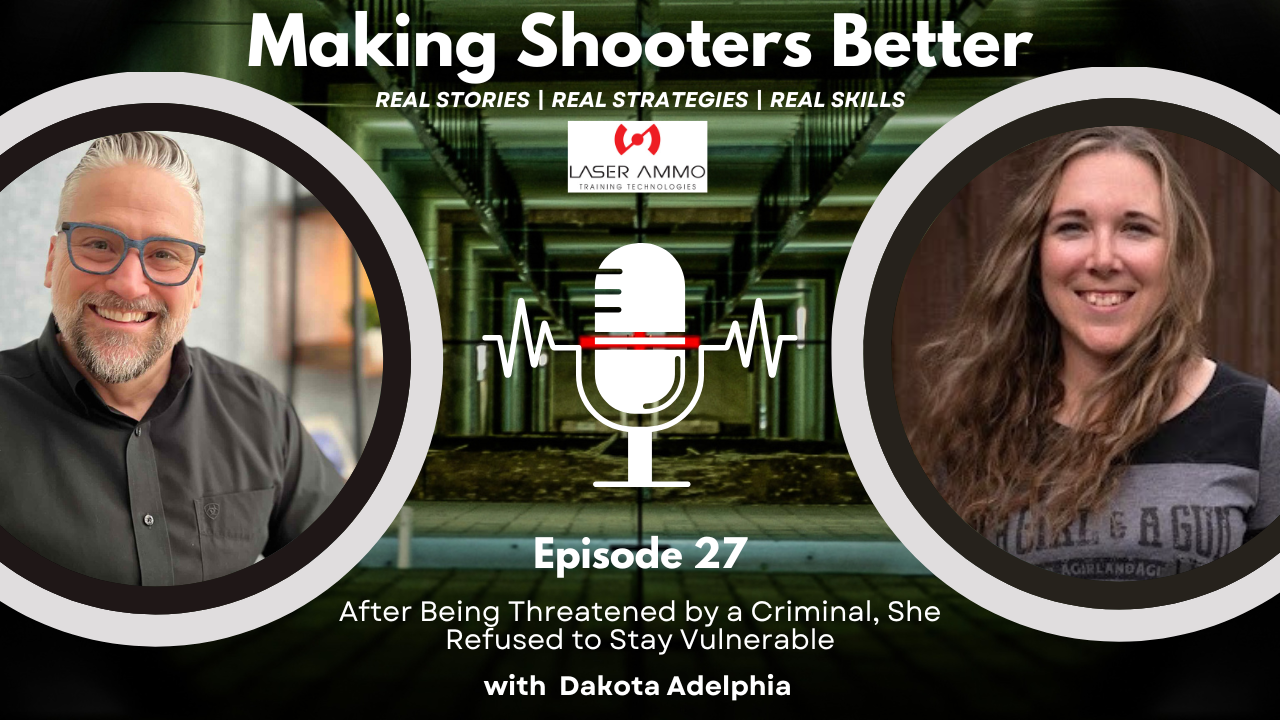
For Dakota Adelphia, taking firearms training seriously did not begin with competition or advocacy. It started with a moment that forced her to confront a difficult reality.
After reporting a crime at her apartment complex, Dakota was threatened by the suspect while police were still on scene. Suddenly, the gap between owning a firearm and truly knowing how to use one became very real.
That experience pushed her deeper into training, concealed carry, competitive shooting, and eventually instruction and Second Amendment advocacy. In this episode of Making Shooters Better, Dakota shares the lessons she learned through that journey and why confidence with firearms is built through repetition, pressure testing, and honest self-assessment.
From Hesitation Around Firearms to Real Training
Dakota did not grow up immersed in gun culture. Growing up near Chicago, much of the messaging she heard around firearms painted them negatively. Recreational shooting and competition were not part of everyday life.
That changed gradually after moving to Colorado and later San Diego, where she was exposed to different perspectives on firearms ownership and personal protection.
When she and her husband brought their first handgun into the home, she quickly realized something important: having a firearm nearby did not automatically create confidence.
If the firearm malfunctioned or something unexpected happened at the range, she immediately handed it back to him because she did not yet understand how to operate it independently under stress.
That realization motivated her to seek professional instruction and begin building genuine skill.
Why Competition Shooting Changed Everything
One of the strongest themes throughout the conversation is the value of competition shooting.
Dakota explains that competition accelerates improvement because it exposes weaknesses quickly. Timers, movement, stage planning, and pressure reveal issues that casual range sessions often hide.
Competitive environments force shooters to:
- Perform under time pressure
- Make decisions quickly
- Manage stress while shooting
- Balance speed and accuracy
- Identify weaknesses honestly
She also discusses how easy it can be to become overly comfortable when training in the same small environment repeatedly.
The “Big Fish in a Small Pond” Problem
Early in her shooting journey, Dakota found success at local matches where precision-heavy shooting styles worked well. But after attending USPSA matches with stronger shooters, she realized there were entirely different levels of performance available.
That experience helped reshape her training mindset.
Instead of staying comfortable, she began actively seeking environments that challenged her skills and exposed weaknesses.
- Train with stronger shooters
- Compete in unfamiliar environments
- Allow yourself to struggle occasionally
- Use setbacks as learning opportunities
Growth often happens fastest when ego is removed from the process.
Learning the Difference Between Precision and Practical Accuracy
Dakota and Terry spend significant time discussing the balance between shooting accurately and shooting efficiently.
While accuracy fundamentals matter tremendously, Dakota explains how excessive perfectionism can eventually become limiting.
For a long time, she demanded extremely tight groups and over-confirmed every sight picture before firing. Eventually, competition helped her realize she was capable of shooting far faster than she believed.
The conversation explores important concepts including:
- Throttle control in shooting
- Acceptable sight pictures
- Learning to process information faster
- Understanding target difficulty
- Adapting speed to the situation
These lessons apply not only to competition, but also to practical defensive shooting where time and pressure matter.
Your Carry Gun Needs Dedicated Practice
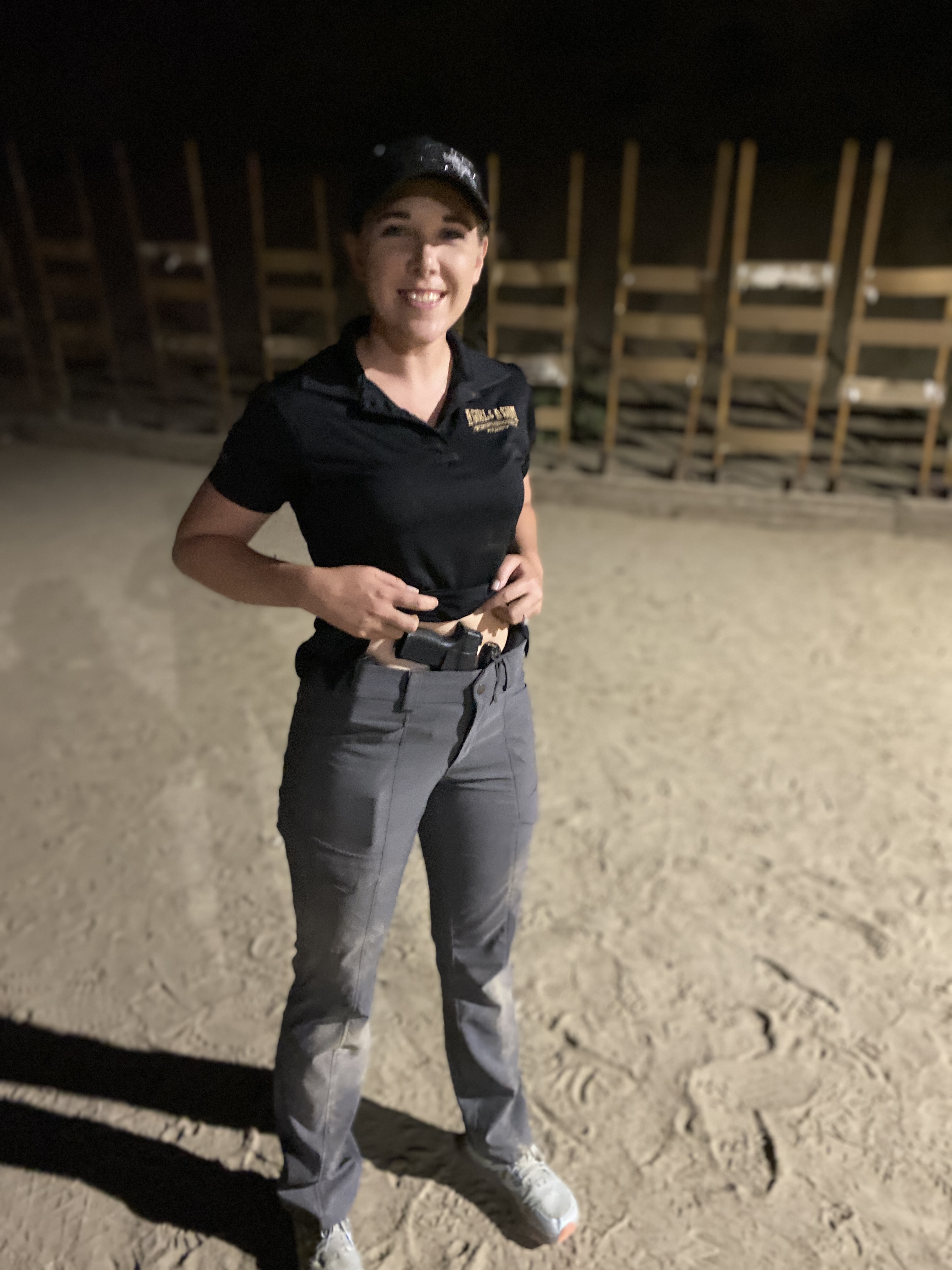
Dakota strongly emphasizes that shooters should spend meaningful time practicing with the firearm they actually carry.
While larger pistols may feel easier during practice sessions or competitions, concealed carry introduces unique challenges that require dedicated work.
She discusses how factors such as body type, concealment methods, optics, clothing, and firearm size all affect performance.
Important carry-focused training considerations include:
- Drawing from concealment
- Managing smaller handgun recoil
- Training with iron sights and optics
- Practicing realistic reloads
- Building consistency with everyday carry equipment
Her philosophy is simple: the firearm you rely on daily deserves regular practice under realistic conditions.
Mindset Matters as Much as Marksmanship
The conversation also dives deeply into the mental side of self-defense and responsible firearms ownership.
Dakota discusses force-on-force training, home defense planning, emotional regulation, and the importance of staying composed under stress.
One particularly important takeaway involves understanding police response times realistically. In many areas, emergency response may take far longer than people expect.
That reality reinforces the importance of preparation, planning, and responsible decision-making during emergencies.
Dakota also explains why unnecessarily searching your home during a possible break-in can create additional danger. In many situations, remaining in a defensible position and allowing the threat to come to you may be the safer option.
Helping New Shooters Feel Comfortable and Safe
One of the most practical sections of the episode focuses on introducing new shooters to firearms safely and responsibly.
Dakota believes many people accidentally create negative first experiences by overwhelming beginners with excessive recoil, noise, poor instruction, or pressure.
Instead, she recommends creating calm, supportive environments where people feel informed and in control.
Her approach includes:
- Visiting ranges during quieter hours
- Using proper hearing protection (double up)
- Starting with manageable firearms
- Loading one round at a time initially (load one, shoot one)
- Explaining each step clearly
- Allowing new shooters to move at their own pace
Her goal is not intimidation. It is confidence-building through safe, positive experiences.
Advocacy and Staying Involved
Beyond instruction and competition, Dakota remains heavily involved in Second Amendment advocacy through Gun Owners Radio and San Diego County Gun Owners.
She discusses why protecting firearm rights requires ongoing involvement, especially in states where restrictive legislation continues expanding.
Her message is straightforward: staying informed and engaged matters long before problems reach your own state or community.
Watch the Full Conversation
This episode of Making Shooters Better delivers valuable insight for concealed carriers, competitive shooters, instructors, and anyone interested in becoming more capable and confident with firearms.
Dakota Adelphia brings a thoughtful and approachable perspective to topics including skill development, pressure testing, mindset, home defense, introducing new shooters, and practical concealed carry.
Watch the full episode below to hear the complete conversation and subscribe to the Laser Ammo channel for more discussions focused on responsible firearms ownership, safe training, and building real-world confidence.
You can also follow Dakota on Instagram at @Lifewithadelphia and on Facebook at @Dakota Adelphia. Or check out her website here.
Listen to More Episodes
You can listen to Making Shooters Better on your favorite podcast platform. Follow the show here:
- Buzzsprout: https://www.buzzsprout.com/2532363/follow
- Amazon Music https://music.amazon.com/podcasts/8156b69d-5ad9-46e9-9a4d-2baff1fbc9ef/making-shooters-better
- Apple Podcasts: https://podcasts.apple.com/podcast/id1849466402
- Spotify: https://open.spotify.com/show/5EhHThJEeV5QZ0QQn5n5CF
- Podcast Index: https://podcastindex.org/podcast/7559749
- Overcast: https://overcast.fm/itunes1849466402
- Castro: https://castro.fm/itunes/1849466402
- Podchaser: https://www.podchaser.com/podcasts/making-shooters-better-6264190
- Goodpods: https://www.goodpods.com/podcasts-aid/1849466402
- TrueFans: https://truefans.fm/65cb6a8a-c2eb-524e-b742-257cbe7bcfce
- Castbox: https://castbox.fm/vic/1849466402
- Podcast Addict: https://podcastaddict.com/podcast/making-shooters-better/6158896
- iHeartRadio: https://www.iheart.com/podcast/1333-making-shooters-better-303769503/
- Pandora: https://www.pandora.com/podcast
- TuneIn: https://tunein.com/podcasts/